
How to jump-start a car. Follow these steps to keep on motoring
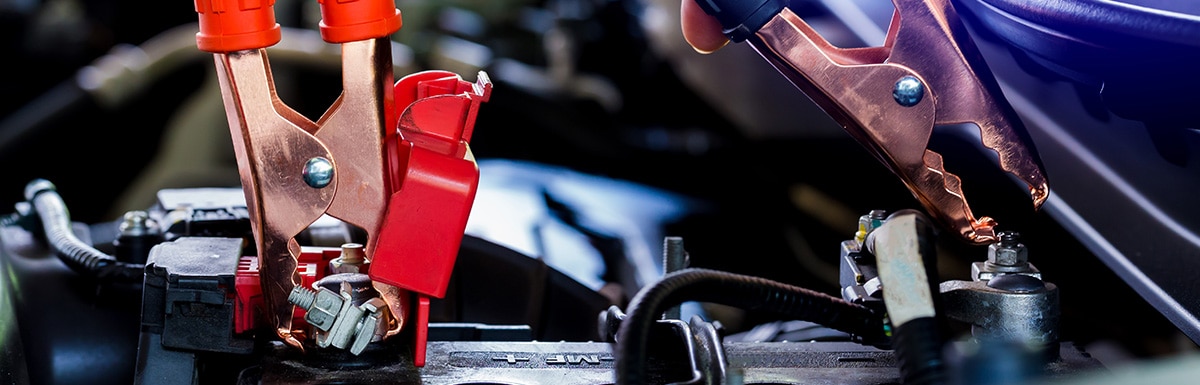
Essential guide to jump-starting a dead battery
Is there anything as frustrating as a flat battery? You get into your car, and you're ready to roll. You turn the key, and then there’s that dreaded silence. Or perhaps you hear “rrr-rrr” as the battery tries to kick the engine over (or is that sound you groaning in despair?).
What causes battery failure?
There are many reasons for a flat battery, including the following:
- Oops, you left the lights on or the door ajar, “bugger.”
- It’s not getting completely recharged due to:
- incomplete charging caused by only driving short distances – even if frequent
- a lack of regular maintenance charging every 1-2 months
- mechanical issues with the car may result in ineffective charging
- Your battery has suffered damage due to previously going flat. When a battery goes flat, sulphate crystals build up on the lead plates. These crystals inhibit your battery's performance and will shorten the life of the battery, particularly if this happens repetitively.
- Your car battery could be at the end of its life. Batteries are consumable items and will always need replacing at some point.
One thing's for sure, Murphy's law somehow ensures your battery will go flat at the most inconvenient time.
Drat. It’s flat. What now?
The easiest thing to do is call Battery World roadside assistance. We’ll come to you 24/7* to test your battery. We can give you a jump-start if that’s all that’s needed or replace the whole battery to keep you moving.
Umm… I’m flat, and out past Odnawoopwoop
So, what if you're a long way from anywhere, say in the middle of the Simpson Desert?
In the words of Van Halen, “Go ahead and jump”.
We spoke to Seb Keane, national product manager for Battery World, to get the low down on how to jump-start a car. Seb’s spent plenty of time helping motorists stranded by flat batteries. Read on to discover his suggestions to jump-start your vehicle and what to do next.
How to jump-start a car battery
Equipment - what you'll need
There are two main ways to jump-start a vehicle:
- Using another vehicle and jumper leads
- Using an all-in-one jump-starter charger pack.
Here’s what you’ll need:
- A second vehicle with a well-maintained battery and a set of suitable jumper leads for the size of batteries
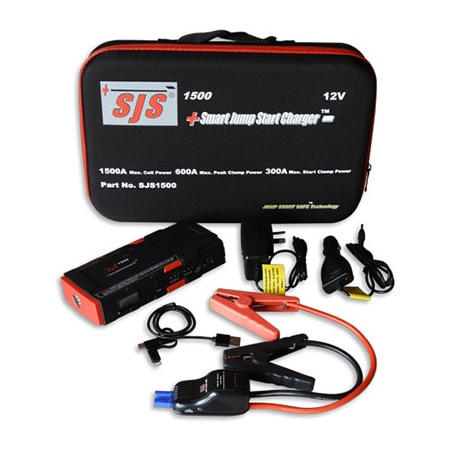
- A jump-starter pack. These consist of a stored power source with jumper lead attachments. A pack means you can jump-start without a second vehicle. Ensure the jump-starter pack is the correct size and power for the battery you’re starting
or
Battery World has a selection of jumper cables, chargers and packs in store. Our experts can help you decide the best product for your needs.
Jump-starting a car using jumper leads and a second vehicle
The following instructions are only for jump-starting a vehicle from another car.
If you’re using a jump-starter charger pack, following your unit's specific instructions is crucial. The guidelines below may be detrimental or potentially dangerous when using a separate jump-starter pack.
Safety should always be your first consideration, especially when dealing with batteries.
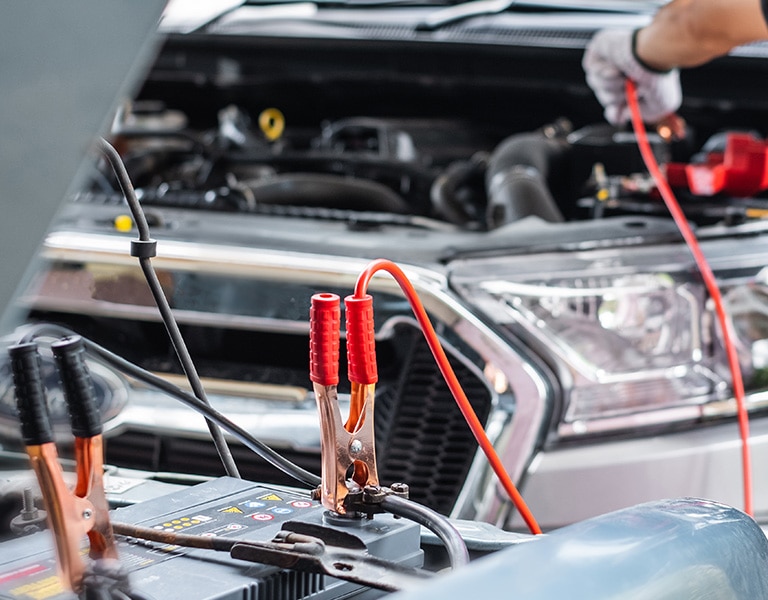
Jump-starting another vehicle safely with suitable jumper leads and basic precautions.
Precautions and preparations:
- Wear safety glasses.
- Look for the battery or jump start points for both cars. Battery and jumpstart points may be listed in your owner manual and won’t always be under the bonnet depending on your vehicle. Decide the best position for the charging vehicle to ensure the jumper leads will reach.
- Ensure the ignition is entirely off on both vehicles and remove keys to be safe.
- Engage the hand brake on for both cars.
- Manual vehicles should be in “neutral” gear, while automatic cars should be in “park”.
- Consult the owner’s manual specific instructions for your car model. The owner’s manual will tell the best position to connect, which is vital for the earth of the negative lead.
- Before using the jumper leads, locate and plan how and where you’ll attach the clamps to both batteries. The positive terminal may be red, have a red plastic cover, or have a positive (+) symbol. The negative terminal will have black colourings or a negative (-) symbol. It is worth noting that they may not always be colour coded.
- Use a small brush or rag to clean either of the battery terminals if needed.
- NEVER stand between two vehicles facing each other during connection, charging and disconnection.
- Do not let the lead clamps come into contact with each other. As soon as you connect one of the clamps, only touch your chosen target area with the other clamp.
Step-by-step jump-starting process
- “Red on dead”. First, attach the positive cable (red) clamp to the flat battery terminal. Look for the “+” symbol and red colouring to indicate the correct terminal.
- Attach the other red clamp to the charged vehicle battery terminal.
- “Negative on last, negative off first” is always a good rule to remember. Connect the negative cable (black) from the charging car battery terminal.
- Connect the negative (black) clamp to the connection point recommended in the owner’s guide for the flat vehicle. Important: this may not be the negative terminal on the battery, so make sure you’ve checked.
- Leave both cars off.
- Wait five minutes for the voltage to balance between the charged and flat battery.
- Start the charged vehicle.
- Start the flat vehicle. If it doesn’t start, ask the charged car driver to increase revs to a constant rate slightly above idle. Certain car alternators must be under load to charge.
- Keep the jumper leads in place for 5 minutes. Disconnecting straight away can lead to stalling as the voltage may plummet.
- After 5 minutes, disconnect the negative (black) jumper lead from the charged car, followed by the flat car.
- Disconnect the positive (red) jumper lead from the charging car, followed by the flat vehicle.
- Keep the flat vehicle running and drive to your destination.
What's Next?
OK, so the “rrr-rrr” sound is now “vroom-vroom”. That’s great. But you’re not entirely out of the woods yet.
Get charging
Even though the jump-start has got you moving, it’s essential to recharge the battery.
It’s best to charge the battery overnight on an approved charger to bring back a full charge to its available capacity. Whilst it’s possible to recharge the battery through the car's alternator, it generally needs more than just a 1-2 hour drive. For this reason, we advise using an approved battery charger, although it’s an excellent excuse for a long drive.
Get charging
Now it’s time to book online or drop into a Battery World store for a free battery health check. Getting the battery tested can help avoid further battery failures.
Charge before you check
Your battery must be fully charged to get this test done. In other words, don't take a just jump-started vehicle and drive straight to an outlet for a battery check. You will not get an accurate reading.
If your healthy battery has gone flat once, it should be OK with a jump-start and a full charge on a charger. Plus, read our care and maintenance article to show your battery some TLC.
But, if you've previously had a few flat batteries or suspect your battery is at the end of its life, it may be time for a new one.
We’re positively here for you (and negatively, in a battery-charging sort of way 😊)
If the worst has happened, and your battery is cactus, visit a Battery World store to get the best advice for your particular car. Or if you're in a pickle, we can come to you 24/7* to keep you motoring.
Need help with a battery?
Find your local battery experts
*conditions apply